Monday, October 23, 2006

A Revolução Hungara de 1956 (VIII)

Relatório da ONU, pags. 161-162

2. Armed forces

518. The Revolutionary National Defense Committee (Forradalmi Honvédelmi Bizottmány) was set up in the early hours of 31 October, at a meeting held at the Ministry of Defence, by two hundred and fifty representatives of (a) The Revolutionary Insurgent Forces (Felkelt Forradalmi Erők); (b) The Revolutionary Military Council of the Hungarian People’s Army (Magyar Néphadsereg Forradalmi Tanácsa); (c) The Revolutionary Council of the National Police Command (Országos Rendőrkapitányság Forradalmi Tanácsa); and (d) The Revolutionary Committee of the Frontier Guards (Határőrségi Forradalmi Bizottmány). The first three groups had been set up on 30 October and represented young freedom fighters - including the Hungarian Revolutionary Youth Alliance - soldiers, non-commissioned officers, officers, cadets and staff officers of the armed forces; and the central authority of the Hungarian National Police. The Frontier Guards had been placed since 1949 under the authority of the ÁVH. They were, nevertheless, considered in a different light by the population of Hungary, and its officers and soldiers pledged loyalty on 29 October to the Government of Mr. Nagy, stating that they sincerely agreed with the revolutionary changes.

519. The meeting of 31 October was convened by the Revolutionary Military Council of the Hungarian People’s Army, which, in the invitation also summoned “the leaders of the Revolutionary Army Committee of the units of the Third Motorized Army Group, which have replaced the Soviet troops withdrawing from Budapest”, to report to it. Thus the terms of the invitation to the above meeting implied that the power of disposition of the armed forces at that date rested with the Revolutionary Military Council, in which leaders of all army branches were represented, and not with the Minister of Defence - at that time Károly Janza. Local revolutionary army committees and military councils had been set up about 28 October all over the country, in different units, including the Air Force Commands and the military academies.

520. The meeting of 31 October set up the Revolutionary National Defence Committee of twenty-one officers headed by General Béla Király, formerly chief of the training centres of the Ministry of Defence; Colonel Pál Maléter, Commander of the Kilián Barracks; Major-General Gyula Váradi of the Tank Corps; Colonel András Marton of the Zrínyi Academy and Lt.- Colonel István Marián, leader of the freedom fighters of the Technological University. It also adopted a resolution of eight points which demanded the withdrawal of Soviet troops from the entire territory of Hungary, the repudiation of the Warsaw Treaty after the convocation of a conference of the signatory Governments, and the occupation of the uranium mines by the Hungarian Army. The Revolutionary National Defence Committee approved the dissolution of the ÁVH, and at the same time demanded that former members of the ÁVH should not be allowed, in the future, to join any armed formation or the National Guard. The Committee stated that Hungarian armed formations would oppose, with arms, any external or internal enemy which set foot on Hungarian soil and attacked its independence, and that, if Soviet troops did not leave Hungary by 31 December 1956, the Hungarian armed forces would fight with arms “for the cause of the country’s freedom and for the defence of the achievements of the victorious revolution”.

521. A few hours before the constitutive meeting of the Revolutionary National Defence Committee on 31 October, Mr. Nagy, acting on behalf of the Council of Ministers, acknowledged and confirmed” the formation of the Preparatory Committee of the evolutionary National Defence Committee which was, apparently, at that time, already in existence. Mr. Nagy added that “the Revolutionary National Defence Committee, once formally established, will form the new armed forces, made up of the units of the army, the police, the revolutionary insurgent forces, and the workers and youth brigades. With their assistance, the Revolutionary National Defence Committee will restore the internal peace of our country and create the conditions for the implementation of the Government programmes proclaimed on 28 and 30 October.(15) The Revolutionary National Defence Committee will operate until the new Government has been formed, after general elections by secret ballot, and has taken office”.

522. Thus from 31 October, the Revolutionary National Defence Committee became the supreme directing power of the Hungarian Army, of other semi-military formations and of the freedom fighters. Between 1 and 3 November the Defence Committee took several decisions of considerable importance and issued statements of policy with or without the Government’s formal blessing. During the day of 31 October, the Committee proceeded to establish the Revolutionary Committee of the Public Security Forces (Forradalmi Karhatalmi Bizottság), composed of the army, the police and the factory guards, which was charged with the coordination of activities of all security forces; and also to develop further the National Guard (Nemzetőrség), which was to be composed of members of armed formations of those fighters who were not members of the army, police or factory guards. General Béla Király was appointed Commander-in-Chief of the National Guard, which was to enjoy equal status with the regular army and police. General Király made a statement in which he said that the National Guard should do their utmost to separate themselves from “sporadic disturbers” and that, for this purpose, they would be issued immediately with a special National Guard identity card; they would also receive, as from that day, flags for their units similar to those used in 1848, to which they would swear allegiance.

A Revolução Hungara de 1956 (VII)

Relatório da ONU, pags. 159-160:

3. Budapest

510. Revolutionary Councils or National Committees were set up all over Budapest. As early as the night of 23 October, individual fighting groups elected from among their members the first temporary Councils to co-ordinate their forces and to present their demands to the Government. These Councils received added responsibility after 28 October when they took over public administration in their respective districts. The leaders of these Councils came together at an early stage with those of the Workers’ Councils in the same area, and proceeded to set up unified Revolutionary Councils, consisting of representatives of the freedom fighters, Workers’ Council and political parties. Several of the Revolutionary Councils of Greater Budapest were elected by democratic voting, but in many districts there had been no time to organize mass meetings for a democratic election before the Soviet forces intervened again on 4 November.

511. Information is available on the Revolutionary Councils of South Budapest, Csepel and Districts II, V, VII, VIII, XII, XIV and XX. These Councils and Committees had an average membership of twenty to twenty-five. Among the members were workers, soldiers, police, students and other intellectuals, small artisans and small shopkeepers. They met every two or three days and, like the provincial Councils, undertook various responsibilities of public administration, as well as emergency tasks rendered necessary by the fighting. Several Budapest Councils, after adopting the sixteen demands of the students as a political platform,(10) made other statements of their own concerning their recognition or conditional recognition of the Nagy Government. The Councils expressed their views in a newspaper, Esti Hírlap (Evening News) which appeared until 3 November. The following is a summary of the major tasks outlined for themselves by these Councils:

a) restoration of order and peace;
b) organization of National Guard;
c) reorganization and democratization of public administration;
d) immediate tasks of daily public administration;
e) organization of supplies to hospitals, mainly from the hotel industry;
f) treatment of, and supply to the sick;
g) just and equitable distribution of food and other gifts from the Provinces and from abroad, in co-operation with the International Committee of the Red Cross and the Hungarian Red Cross;
h) equitable distribution of available apartments;
i) repair of apartments and the communications system;
j) he clearance of rubble.

By 3 November streetcars and buses had started, and on 5 November schools and normal work were to resume. In addition, the Councils spent a great deal of time with political questions. Some of the Councils suggested that the Government should be reorganized on a broader national, democratic and coalition basis. General support was expressed for an independent, socialist and democratic Hungary and for the three people who, in their opinion, stood for these ideals: Imre Nagy, János Kádár and Béla Kovács.

512. A National Committee and a Revolutionary Council, composed of representatives of the different parties, took over on 30 October the “ideological and political administration of the municipal authority” of Budapest, and pledged the restoration of full autonomy to the capital. The Committee, at its meeting of 2 November, elected József Kővágó, Mayor, and Péter Bechtler, Vice-Mayor of the city - the first a member of the Independent Smallholders’ Party, the other of the Social Democratic Party.(11)

A Revolução Hungara de 1956 (VI)

Relatório da ONU, pags. 158-59


2. The Transdanubian National Council

506. Of all the Revolutionary Councils, that which appears to have wielded the greatest political influence was the Transdanubian National Council. This Council was set up at a conference in Győr on 30 October, at tended by about 400 delegates, four from each county and two from each city in the Transdanubian region, as well as by delegates of the Revolutionary Councils of Borsod and Bács-Kiskún Counties and the Central Workers’ Council of Csepel. The conference was opened by the President of the “National Revolutionary Council” of Győr-Sopron County, Attila Szigethy. Demonstrations held in Győr during the previous days had demanded the formation of a “counter-Government” to that of Mr. Nagy and had called for military help from the Western Powers and for war with the Soviet Union. However, news reached the conference from Budapest about the “Inner-Cabinet” which Mr. Nagy had just set up(8) and which included Béla Kovács, the Independent Smallholder leader from Pécs in the Transdanubian area, and about the opening of negotiations for the withdrawal of Soviet troops. Under the impact of this news, the conference decisively rejected the proposal for a “counter-Government” and declared that it would immediately open negotiations with Mr. Nagy regarding the following points:

(1) The Government must give reliable guarantees for the fulfilment of promises regarding the demands of the people, above all regarding the withdrawal of Soviet forces;
(2) The Government must hold general elections by secret ballot with the participation of several parties after the departure of the Soviet troops, but not later than January 1957;
(3) The Government must set up local organs for the maintenance of order with the approval of the competent Revolutionary Councils;
(4) Until a new National Assembly could be convened, all appointments of colonels and other senior officers must be approved by a “Central Council”, which is still to be set up;
(5) Changes within the Government are necessary and the freedom fighters must be represented adequately in the new Government;
(6) The Government must issue a neutrality declaration and communicate it to the United Nations;
(7) The Government must guarantee freedom of speech, freedom of the Press, freedom of assembly and freedom of religion.

The conference delegates said that the Transdanubian Council would withdraw recognition from the Government if the above demands were not satisfied and would start negotiations with Revolutionary Councils in Budapest to set up a new Government. The declaration added that the Council took note of the pledge given by Army units in four cities of western Hungary, including Győr, that they would defend the people against all foreign attacks, even if they received orders to the contrary. The Conference declared that it was essential to establish a unified military command for the whole territory of Hungary. The Transdanubian National Council stated at the outset of the Conference that negotiations with the Government would be undertaken in 24 hours and that, in the meantime, the strike would continue. During the night it was announced that the Ninth Army Division in its entirety had associated itself with the Council. This was followed by an appeal broadcast by the Council to all troops in the Transdanubian area calling upon them to follow the example of the Ninth Division.(9)

507. Under the chairmanship of Mr. Szigethy, a delegation from the Transdanubian National Council went to Budapest and met Mr. Nagy on 31 October at the Parliament Building. For several days, Free Radio Győr had been insistently broadcasting the Council demands, including that for Hungarian neutrality. According to a broadcast, emanating from Free Radio Petőfi, on 31 October at 10.30 p.m. Mr. Nagy took note of the creation of the Transdanubian National Council and requested its assistance. Representatives of the Council stated that the condition of their support to the Government was the acceptance of the demands of the Council.

508. The Prime Minister in his reply asked representatives of the Council to give him their confidence; he told them that he was taking steps to fulfil several of the Council’s demands. On the following day at 7.45 p.m. Mr. Nagy made his broadcast proclaiming the neutrality of Hungary and announcing his appeal to the United Nations.

509. Mr. Szigethy and his colleagues, on their return to Győr, reported to the second meeting of the Transdanubian National Council, which adjourned in the early hours of 1 November. The Council decided in favour of the continuation of the strike, pledging the esumption of work after the withdrawal of Soviet troops “had been guaranteed diplomatically”. Acording to testimony received by the Special Committee, at the above meeting of the Council, a delegate of József Dudás, the Chairman of the Hungarian National Revolutionary Committee, proposed once again the establishment of a “counter-Government” within the framework of the Council. This proposal was rejected by the Council with an overwhelming majority.

A Revolução Hungára de 1956 (V)

Continuando com a citar o tal relatório (o continuando no tema das formas de auto-organização adoptados pelo povo húngaro em 1956):

[pags. 155-158]

II. Revolutionary Councils

A. Territorial Councils

1. The provinces

493. As from 24 October, Revolutionary Councils were set up in many parts of Hungary in villages, towns, at district level and in the counties. Whole areas were brought under their control after successful bloodless shorter or longer fights with the ÁVH. They at once assumed administrative responsibilities and began address demands to the Government, some of which had considerable influence on the course of events.

494. Various names were used by these Councils, such as Revolutionary Council, National Revolutionary Council, Revolutionary Committee, Workers’ and Soldiers’ Council, Revolutionary
Workers’ Council, National Revolutionary Committee, National Council, National Committee, Socialist Revolutionary Committee. Many of the Revolutionary Councils were called Municipal Workers’ Council or Workers’ Council which sometimes made it difficult to distinguish them from the Workers’ Councils in factories. In part II of this chapter, the term “Revolutionary Council” will be used.

495. Among the first provincial Revolutionary Councils set up immediately after 24 October were those of Dunapentele and Miskolc. The Councils of Debrecen, Győr and Jászberény were set up on 25 October; those of Mosonmagyaróvár, Tatabánya and Veszprém on the 26th; Eger, Nyíregyháza, Szeged, Székesfehérvár, Szolnok and Zalaegerszeg on the 27th; Szombathely on the 28th and Kaposvár on 30 October.

496. The circumstances in which the Councils were elected varied from one place to another. In many places they came into being after peaceful demonstrations, combined with the liberation of political prisoners; elsewhere the population’s demands, among which the election of a Revolutionary Council was prominent, were resisted by the ÁVH and resulted in a massacre of the population before it was possible to proceed with the setting up of a Council. The following are some examples.(4)

497. In Debrecen in the course of a peaceful manifestation on 23 October, the ÁVH killed 2 persons. After this, power was taken over by a “Revolutionary Socialist Committee” which, after two days’ negotiation, disarmed the ÁVH. In Győr the Council was set up on 25 October after demonstrations which took place before the Headquarters of the Communist Party with the participation of a crowd of more than 10,000. Demonstrators were originally led by Communists, and were joined by factory workers; the crowd tore down the Soviet emblems from public buildings and cut out the Soviet insignia from the flags. When the prison was attacked and political prisoners liberated, the ÁVH intervened and killed four people. The demonstrations continued during the night, and the day after, a notice was published in the papers concerning the mode of election of the Revolutionary Councils, which eventually took over power and disarmed the ÁVH. In Jászberény, after the news of uprising in Budapest arrived, workers and intellectuals went on strike, removed the Soviet insignia from official buildings and hoisted national flags. The Revolutionary Council was established on 25 October by 150 inhabitants of the town. By 29 October the Council had the support of the peasants of the region. In Miskolc revolutionary demonstrations took place on 24 and 25 October and a “Workers’ and Soldiers’ Council” was set up. Demonstrations went on the 26th before Police Headquarters and when demands were made for the release of demonstrators arrested earlier, the ÁVH fired into the crowd. After this, the crowd, composed of miners and workers, attacked Police Headquarters, blowing open the door with explosives and killing many members of the ÁVH. By nightfall, the Council had taken over full control of the town. At Mosonmagyaróvár, on 26 October, students and workers joined by townspeople demonstrated before the ÁVH Headquarters, asking that the Soviet star be removed from the building. ÁVH officers opened fire with four machine-guns, others threw hand grenades at the defenceless people; 101 people were killed and 150 wounded, many of them women and small children. After these events, with the assistance of the local police, the population disarmed the ÁVH

498. In Sopron the local population, with the help of the workers of Győr and Mosonmagyaróvár, disarmed the ÁVH and formed the “Provisional National Council”. In Szeged on 26 October, a military administration took the place of the City Council. On 27 October a demonstration took place in the course of which many people were wounded by ÁVH, and during the day a “Workers’ Council” for the city was set up. In Szolnok there was fighting on 26 October to break down the Hungarian Communist organization and also against the Soviet troops stationed there, followed by the setting up of a Revolutionary Council. In Veszprém representatives of Workers’ Councils in factories met on 26 October at the University and elected a Revolutionary Council for the city and the county. In Zalaegerszeg on 26 October a crowd of several thousands demonstrated before the county building and requested the resignation of the president of the County Council. The president resigned, and in agreement with him a “Workers’ Council” was set up. In the course of the demonstrations, however, shooting started and two persons were killed and many were wounded.

499. The procedure followed in establishing the Councils also varied from place to place. The methods used included election by secret ballot at a general meeting, or at a meeting of factory workers’ delegates, and election by representatives of peasants, factory workers and professional organizations. Sometimes, members of the Council were appointed by acclamation, sometimes by open election from those present at the meeting. In some cases, de facto non-Communist leadership appears to have been established without previous election.

500. The Councils included representatives of all segments of the population. In Debrecen, the Council had one hundred members of whom 60 per cent were workers, 20 per cent University students and 20 per cent representatives of the armed forces. The Councils of Győr and Eger consisted of workers, peasants, soldiers and intellectuals, while half of the twentyeight members of the Council of Jászberény were peasants. Revolutionary Councils were fully supported from the beginning by the armed forces (e.g., Debrecen, Eger, Győr, Szeged, Szolnok, Veszprém), and by the local police (e.g., Debrecen, Győr, Mosonmagyaróvár, Szolnok, Tatabánya, Veszprém).

501. Some of the Revolutionary Councils were set up with the consent of the local Committee of the Hungarian Workers’ (Communist) Party (e.g., Debrecen) many of them had from the beginning to the end Communist members (e.g., Debrecen) ; others dropped their Communist members after 1 November (e.g., Pécs). Most of them enjoyed almost at once the editorial support of the local organ of the Hungarian Workers’ (Communist) Party. Regarding the attitude taken by the Councils towards the Party, the following comments of Hétfői Hírlap of 29 October are significant:

“The demands [of the Revolutionary Councils] are, on the whole, identical and essentially socialist and democratic(5) in their character, and do not intend to destroy the people’s power. This is proved by the fact that wherever Party organizations endorsed the aims of thedemocratic revolution, no action was taken against them.”

502. Some of the Revolutionary Councils had radio stations of their own, which broadcast news and announcements during the whole period of the uprising. The main radio centre of the Provinces was in Győr, where Free Radio Győr and Free Radio Petőfi functioned on medium and short waves. Another important centre was the radio of the Workers’ Council of the County Borsod in Miskolc which broadcast on medium wave. Other free stations were Radio Damjanich (Szolnok), Free Radio Debrecen, Free Radio Dunapentele, Free Radio Eger, Free Radio Rákóczi (Kaposvár), Free Radio Széchenyi (Szeged), Free Radio Szombathely, Radio Vörösmarty (Székesfehérvár) and the Radio of the Workers’ Council of the County of Szabolcs-Szatmár. Most of the latter stations broadcast on short wave.

503. Of considerable political significance were the demands put forward by the Councils to the Government on behalf of the people of their area. These demands varied greatly, in accordance with the geographic location of the Councils. Those from the western parts of the country submitted more extreme demands than the Councils in the east. Demands differed further with the political trends which were represented within the Councils.

504. Some Councils gave qualified approval to the Government of Mr. Nagy, while making conditions for full recognition. The great majority of Revolutionary Councils were unanimous in calling for immediate cease-fire, the withdrawal of Soviet troops from Hungary and the organization of free elections. Other demands amongst those put forward by the Revolutionary Councils of twelve Hungarian cities and counties(6) which were examined, were for complete independence and freedom for Hungary, for a protest to the United Nations against the presence of Soviet troops in Hungary, for the United Nations to deal with the Hungarian situation, for equality with the USSR, withdrawal from the Warsaw Treaty, recall of Péter Kós, the representative of Hungary to the United Nations, and for a proclamation of neutrality. Further demands included changes within the structure of the Government, the abolition of the ÁVH and the creation of new police, the establishment of the National Guard, liberation of political prisoners, in particular, of Cardinal Mindszenty, freedom of speech, press, religion and association, the setting up of Workers’ Councils in factories; new agrarian policies and, in particular, abolition of compulsory delivery of produce by the peasants.(7) It was often emphasized that a return of the landed estates to their former owners would not be tolerated. “The people have already decided as far as the question of land, factories and mineral wealth is concerned”, one Council delegate told the Government on 3 November. “The people will never alter that decision.”

505. The Revolutionary Councils controlled the ad ministration of the cities in which they were set up, dealing with all the major problems of local government and taking special measures to restore and maintain order by setting up of local units of the National Guard. Some collected medical supplies and food for the fighters and wounded in Budapest. Thus the Revolutionary Council of Jászberény, in co-operation with the local peasants, from 30 October on provided the fighters in Budapest free of charge with nearly 10,000 kilogrammes of food on a daily basis.

A Revolução Húngar de 1956 (IV)

Continuando com a minha transcrição do Relatório da ONU:

[pags. 154-155]

REVOLUTIONARY AND WORKERS’ COUNCILS

I. Introduction

485. No aspect of the Hungarian uprising expressed its democratic tendencies or its reaction to previous conditions more clearly than the creation of Revolutionary Councils in villages, towns and on the county level, and of Workers’ Councils in factories. Within a few days, these bodies came into existence all over Hungary and assumed important responsibilities. Their chief purpose was to ensure for the Hungarian people real, and not merely nominal, control of local government and of factories, mines, and other industrial enterprises. There was even a suggestion that a National Revolutionary Committee might replace the National Assembly,(1) while another proposal was that a Supreme National Council could exercise the prerogative of Head of the State.(2) While nothing of the kind took place, the fact that such proposals could be put forward at all suggests the degree to which they were felt to reflect the desires of the people.

486. The first part of this chapter will deal with the Revolutionary Councils and the second part with the Workers’ Councils in factories.

487. Before the end of October, the entire Communist-controlled Party apparatus had collapsed in Hungary, leaving a vacuum in public administration. By article 30 of the Constitution of the Hungarian People’s Republic of 18 August 1949, various Councils had been established as local organs of the State administration; including County Councils, District Councils, Town Councils, Borough Councils and Town Precinct Councils. Owing to the one party system, these Councils came under the direct control of the Party and local autonomy was destroyed. As soon as the Communist Party apparatus collapsed, the Hungarian people demanded that democratic elections be held in autonomous communities and that the Communist Party functionaries, police administrators and their associates be replaced by men trusted by the people. In accordance with these demands, Revolutionary Councils were created and took over the functions of the local administration in urban as well as rural areas.

488. In addition, and mostly after 27 October, Revolutionary Councils or Committees were created within Government offices, many of which took over the actual running of Departments; and in the Army, by students and other youth groups, as well as by groups of intellectuals.

489. Just as these Revolutionary Councils appeared to be an expression of popular dissatisfaction with the local councils of the régime, so the Workers’ Councils were an attempt to establish control by the workers themselves in factories, mines and similar enterprises. Under article 6 of the Constitution of 1949, the State and public bodies were to act as “trustees for the whole people” for mines, large industrial enterprises and State-sponsored agricultural undertakings. In practice, this meant rigid Party control and, during the Rákosi régime, as was seen in chapter IX, the Hungarian economy was largely subjected to the interests of the Soviet Union.(3) The Workers’ Councils in factories seem to have been an expression of popular disapproval of this state of affairs, as well as the reaction of the workers to the Governmentcontrolled trade unions.

490. Revolutionary and Workers’ Councils sprang up all over Hungary without any central direction or co-ordinating plan, but, as the days passed, efforts were made to achieve some degree of co-ordination. These efforts were still in a tentative stage when the second Soviet intervention occurred on 4 November.

491. On 28 October the Hungarian Workers’ (Communist) Party commended the establishment of these Councils in an article in Szabad Nép, its official organ:

“News comes all the time from all parts of the country about the setting up of municipal and county Councils, Workers’ Councils, National Councils or Revolutionary Socialist Committees - many different names. All are alike, however, in being spontaneous, popular organs which came into existence through the upsurge of a new democracy in this country. We do not know who the members of the Councils are; we do know, however, that they are representatives of the workers and that they are being elected in a democratic way. There is none among them who would abuse the confidence of the people, who would misuse his power or think only of his personal position. Among them are those Communists who are respected and loved by the people. The good judgment and intelligence of the working masses are seen in the first measures taken by these popular organs.”

492. Official recognition was given to the Revolutionary Councils by Mr. Nagy “in the name of the National Government” on 30 October. He referred to them as “autonomous, democratic local organs formed during the Revolution,” and asked for “full support” from them. The setting up of factory Workers’ Councils in all plants was recommended by the Central Committee of the Hungarian Workers’ (Communist) Party in a statement issued on 26 October, and on the same day the Praesidium of the National Council of Trade Unions published a similar appeal to all workers. "

A Revolução Húgara de 1956 (III)

Já agora, algumas passagens do Relatório da ONU [pdf] sobre a Revolução Húngara:

[pag. 21-22]

Revolutionary and Workers’ Councils

62. Most of the available Soviet forces had been dispatched to Budapest and, meanwhile, there was comparatively little fighting in the provinces. Here, the first days of the uprising saw a transfer of power from the Communist bureaucracy to the new Revolutionary and Workers’ Councils. In most cases, these Councils took over without opposition, although some incidents were reported during this process. These Councils represented a spontaneous reaction against the dictatorial methods of the régime. The Revolutionary Councils took over the various responsibilities of local government. There were also Revolutionary Councils or Committees in the Army, in Government departments and in professional groups and centres of activity such as the radio and the Hungarian Telegraph Agency. Members of the Councils were usually chosen at a meeting of those concerned. They were intended to prepare for the setting up of a genuinely democratic system of government. The Councils also put forward various political and economic demands, calling for the withdrawal of Soviet troops, free and secret elections, complete freedom of expression and the abolition of the one-party system. The most influential of these bodies was probably the Transdanubian National Council, which represented the people of Western Hungary. Using the Free Radio Station at Győr, this Council demanded that Hungary should renounce the Warsaw Treaty and proclaim her neutrality. Should its demands not be accepted, it proposed to set up an independent Government.(21)

63. The Workers’ Councils were set up in a variety of centres of work, such as factories, mines, industrial undertakings and so on. They also put forward political demands and wielded considerable influence. However, their principal purpose was to secure for the workers a real share in the management of enterprises and to arrange for the setting up of machinery to protect their interests. Unpopular measures, such as that of establishing “norms” of production for each worker, were abolished. The emergence of Revolutionary and Workers’ Councils throughout Hungary was one of the most characteristic features of the uprising. It represented the first practical step to restore order and to reorganize the Hungarian economy on a socialist basis, but without rigid Party control or the apparatus of terror.(22)

A Revolução Húngara de 1956 (II)


Eu já escrevi alguma coisa sobre isso, há uns tempos.

Para uma descrição pormenorizada dos acontecimentos e das várias alegações, há o relatório das Nações Unidas (se alguém quiser ler um PDF de 268 páginas...).

Sunday, October 22, 2006

Arrefecimento global em 1974?

A.A.Alves escreve na Dia D e no Insurgente que "[n]a sua edição de 24 de Junho de 1974, a prestigiada revista Time alertava para a possibilidade de uma nova era glacial. Os sinais estariam por todo o sítio, desde a “inesperada persistência e grossura dos bancos de gelo nas águas que circundam a Islândia” até à migração para Sul de algumas espécies em busca de calor. Em tom de alarme, os leitores da Time eram igualmente informados de que, desde os anos 1940, a temperatura média global estaria a descer de forma substancial, assim como da existência de numerosos estudos científicos apontando para uma inequívoca tendência de acelerado arrefecimento global. Nos dias de hoje, mantém-se o tom alarmista em torno das alterações climáticas mas o “consenso científico” anunciado é o oposto."

Uma passagem do livro "A Ecologia", de Giordano Repossi, publicado em Portugal em 1977, pelo Círculo dos Leitores (o original italiano deve ser uns anos anterior):

"A presença no ar de anidrido carbónico produzido pela combustão de substências que contêm carbono passou de 290 para 330 partes por milhão nos últimos setenta anos. Se atingirem 600 partes por um milhão, a temperatura da Terra sofrerá um aumento de um grau e meio."

(...)

"Do ponto de vista estritamente técnico , a energia da Terra provém principalmente da absorção das radioções solares. O equilibrio térmico conserva-se mediante a irradiação do excesso de energia no espaço. Ao invés, o anidrido carbónico deixa passar a energia solar para a Terra, mas absorve uma parte considerável da radiação em excesso que a Terra deveria dispersar no espaço."

"Assim, quando o homem queima combustíveis provenientes da decomposição de matéria orgânica liberta na atmosfera quantidades incalculáveis de anidrido carbónico."

"Este óxido de carbono forma uma espécie de abóbada que retêm o calor. É aquilo a que os cientistas chamam «efeito de estufa». Desse modo, o nosso planeta ameaça transformar-se numa espécie de estufa colossal, dentro do qual o calor aumentará cada vez mais."

"Por enquanto trata-se só de uma hipótese, mas, segundo alguns meteorologistas, já se verificou uma variação da temperatura de cerca de meio grau nos primeiros cinquenta anos do século. É um dado que parece desprezável; no entanto, segundo alguns cientistas, pode ter provocado a retirada dos glaciares do Alasca ou outros fenómenos como o que se observou nos Andes do Peru, onde nos últimos decénios a linha das neves subiu a 600-700 m."

"Não se deve esquecer que o homem, com a sua necessidade sempre crescente de energia, dispersa na atmosfera quantidades imensas de calor."

"Outros cientistas, pelo contrário, são do parecer oposto, isto é, que o nosso planeta arrefeceria progressivamente devido às poeiras que permanecem suspensas na atmosfera". [e depois, o texto prossegue, explicando agora a teoria do arrefecimento]

Em primeiro lugar, penso que não é preciso explicar que "anidrido carbónico" era a antiga designação do dióxido de carbono.

Ora, se um livro para o "grande público" (logo, menos dado a nuances e menos actualizado que um texto científico), traduzido para português em 1977 já fala do perigo do aquecimento pelo CO2 (ainda que apresentando-o como "apenas uma hipótese", e contrapondo-o à hipótese oposta), isso quer dizer que de certeza que nos anos 70 (nomeadamente, em 1974) não havia nenhum "consenso científico" sobre o "arrefecimento global".

[Seja como fôr, o essencial desta questão já foi analisado por Rui Curado Silva no seu "debate" com João Miranda]

Saturday, October 21, 2006

Os Anuncios do Google - curiosas combinações

O Google tem um sistema de anúncios, em que para os sites que aderem ao sistema, são colocados anúncios escolhidos automaticamente de acordo com os interesses dos visitantes do site em questão.

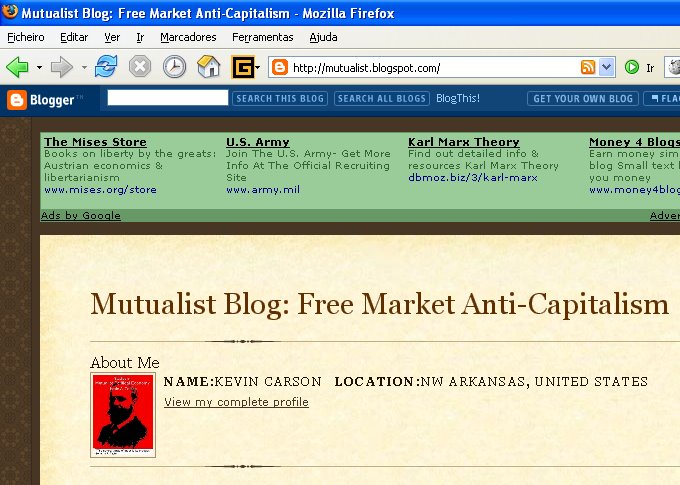
Provavelmente, só no Mutualist Blog seria possível o sistema exibir simultaneamente anúncios à Karl Marx Theory e à loja do Mises Institute (quanto ao anúncio do US Army, é que destoa completamente, tanto do blog, como de ambos os anúncios vizinhos).


Friday, October 20, 2006

Sobre a UNIFIL (II)

O comandante da UNIFIL concorda comigo.

As minhas receitas (II)

E não é que as senhoras, afinal, quiseram mesmo conhecer as minhas receitas?!

[Este post é dedicado à minha colega G.V., que mesmo ontem telefonou-me a dizer "Então, hoje escreveste alguma coisa? E como é que vão aquelas tuas receitas?"]

Tuesday, October 17, 2006

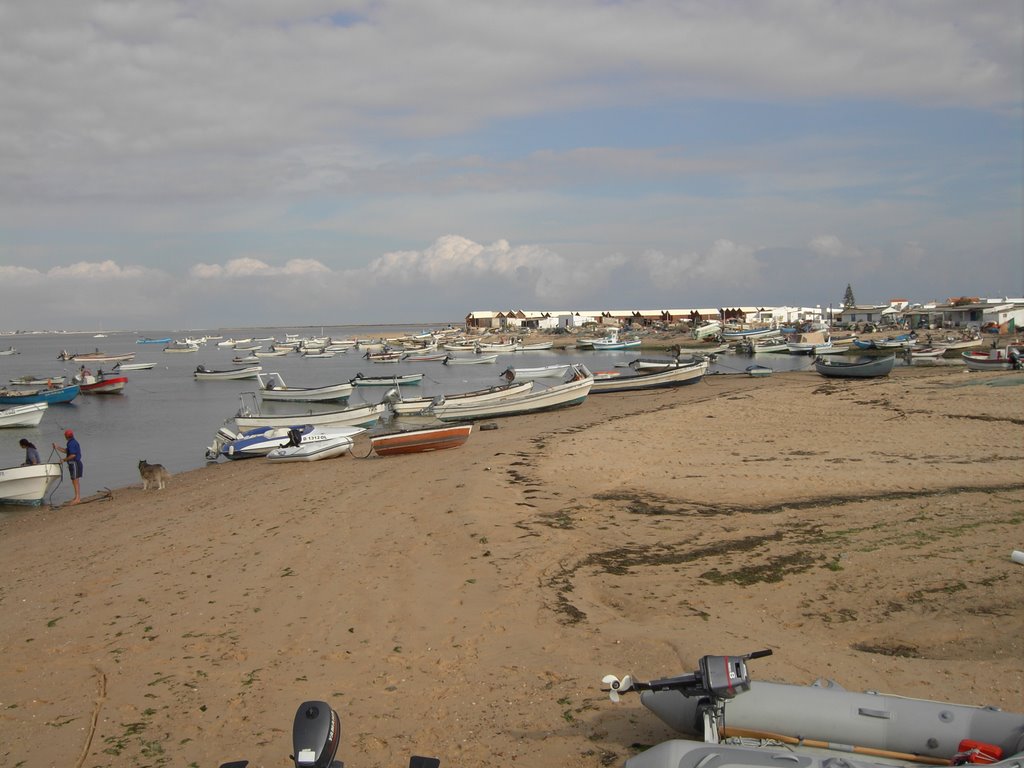
Ilha da Culatra

Mail que recebi

A seguir transcrevo um mail que recebi:

Caríssimos,

Eu sou mais um dos que estou com os bancos pelos cabelos. O nosso país atravessa a crise que todos sabemos, no entanto, e fruto de uma “gestão divina”, os bancos continuam a apresentar lucros astronómicos que vão desde 30% a 80%. È óbvio que todos sabemos como e porquê, o email abaixo é bem elucidativo das artimanhas que eles arranjam.


Assim sendo acho que chegou a altura de fazermos alguma coisa, e mostrarmos a estes senhores que não estamos a “dormir”, a minha ideia consiste no seguinte:

Em datas especificas os clientes de cada um dos bancos devem dirigir-se a uma agência bancária e levantar o máximo de dinheiro da conta ordem que lhe for possível, dentro das possibilidades de cada um. É óbvio que o que vai acontecer é o banco não ter dinheiro suficiente para nos entregar, tal como é obrigado, pois o dinheiro á ordem tem de estar disponível a qualquer momento. Caso o dinheiro não vos seja entregue chamem a policia, façam “barulho”, armem uma confusão, etc.

O que vos peço é que façam chegar esta mensagem ao maior número possível de pessoas, por todos os meios que vos for possível, email, chat, blogs, sms, anúncios de jornal, vale tudo!!!

Para que a mensagem tenha tempo de ser difundida avanço com as seguintes datas e para os seguintes bancos:

13/11/2006 – Agências da CGD

14/11/2006 – Agências do BCP

15/11/2006 – Agências do BES

16/11/2006 – Agências do BPI

17/11/2006 – Agências do MG

20/11/2006 – Agências do BBVA

21/11/2006 – Agências do Santader

22/11/2006 – Agências do Totta

23/11/2006 – Agências do Barclays

Bem sei que não estão aqui representados todos os bancos a actuar em Portugal, mas penso que são os mais representativos. Esperemos que os restantes não precisam de ser a vir “avisados”, seria bom sinal!

Com os melhores cumprimentos,

A. A.

----------------------------------------------------------------------------------------

CARTA ABERTA AO BES

> Esta carta foi direccionada ao Banco BES, porém devido à criatividade com que foi redigida, deveria ser direccionada a todas as instituições financeiras.
>
>
> CARTA ABERTA AO BES
>
> Exmos Senhores Administradores do BES
>
> Gostaria de saber se os senhores aceitariam pagar uma taxa, uma pequena taxa mensal, pela existência da padaria na esquina da v/. rua, ou pela existência do posto de gasolina ou da farmácia ou da tabacaria, ou de qualquer outro desses serviços indispensáveis ao nosso dia-a-dia.

> Funcionaria desta forma: todos os meses os senhores e todos os usuários, pagariam uma pequena taxa para a manutenção dos serviços (padaria, farmácia, mecânico, tabacaria, frutaria, etc.). Uma taxa que não garantiria nenhum direito extraordinário ao utilizador. Serviria apenas para enriquecer os proprietários sob a alegação de que serviria para manter um serviço de alta qualidade ou para amortizar investimentos. Por qualquer produto adquirido (um pão, um remédio, uns litros de combustível, etc.) o usuário pagaria os preços de mercado ou, dependendo do produto, até ligeiramente acima do preço de mercado.

> Que tal?

> Pois, ontem saí do meu BES com a certeza que os senhores concordariam com tais taxas. Por uma questão de equidade e de honestidade. A minha certeza deriva de um raciocínio simples.

> Vamos imaginar a seguinte situação: eu vou à padaria para comprar um pão. O padeiro atende-me muito gentilmente, vende o pão e cobra o serviço de embrulhar ou ensacar o pão, assim como, todo e qualquer outro serviço. Além disso, impõe-me taxas. Uma "taxa de acesso ao pão", outra "taxa por guardar pão quente" e ainda uma "taxa de abertura da padaria". Tudo com muita cordialidade e muito profissionalismo, claro.

> Fazendo uma comparação que talvez os padeiros não concordem, foi o que ocorreu comigo no meu Banco.

> Financiei um carro. Ou seja, comprei um produto do negócio bancário. Os senhores cobraram-me preços de mercado. Assim como o padeiro cobra-me o preço de mercado pelo pão.
> Entretanto, de forma diferente do padeiro, os senhores não se satisfazem cobrando-me apenas pelo produto que adquiri.

> Para ter acesso ao produto do v/. negócio, os senhores cobraram-me uma "taxa de abertura de crédito" - equivalente àquela hipotética "taxa de acesso ao pão", que os senhores certamente achariam um absurdo e se negariam a pagar.

> Não satisfeitos, para ter acesso ao pão, digo, ao financiamento, fui obrigado a abrir uma conta corrente no v/. Banco. Para que isso fosse possível, os senhores cobraram-me uma "taxa de abertura de conta".

> Como só é possível fazer negócios com os senhores depois de abrir uma conta, essa "taxa de abertura de conta" se assemelharia a uma "taxa de abertura da padaria", pois, só é possível fazer negócios com o padeiro, depois de abrir a padaria.

> Antigamente, os empréstimos bancários eram popularmente conhecidos como "Papagaios". Para gerir o "papagaio", alguns gerentes sem escrúpulos cobravam "por fora", o que era devido. Fiquei com a impressão que o Banco resolveu antecipar-se aos gerentes sem escrúpulos.

> Agora ao contrário de "por fora" temos muitos "por dentro".

> Pedi um extracto da minha conta - um único extracto no mês - os senhores cobraram-me uma taxa de 1> EUR> .

> Olhando o extracto, descobri uma outra taxa de 5> EUR> "para a manutenção da conta" - semelhante àquela "taxa pela existência da padaria na esquina da rua".

> A surpresa não acabou: descobri outra taxa de 25> EUR> a cada trimestre - uma taxa para manter um limite especial que não me dá nenhum direito. Se eu utilizar o limite especial vou pagar os juros mais altos do mundo. Semelhante àquela "taxa por guardar o pão quente".

> Mas, os senhores são insaciáveis.

> A prestável funcionária que me atendeu, entregou-me um desdobrável onde sou informado que me cobrarão taxas por todo e qualquer movimento que eu fizer.

> Cordialmente, retribuindo tanta gentileza, gostaria de alertar que os senhores se devem ter esquecido de cobrar o ar que respirei enquanto estive nas instalações do v/. Banco.

> Por favor, esclareçam-me uma dúvida: até agora não sei se comprei um financiamento ou se vendi a alma?

> Depois que eu pagar as taxas correspondentes, talvez os senhores me respondam informando, muito cordial e profissionalmente, que um serviço bancário é muito diferente de uma padaria. Que a v/. responsabilidade é muito grande, que existem inúmeras exigências legais, que os riscos do negócio são muito elevados, etc, etc, etc. e que apesar de lamentarem muito e nada poderem fazer, tudo o que estão a cobrar está devidamente coberto por lei, regulamentado e autorizado pelo Banco de Portugal.

> Sei disso.

> Como sei, também, que existem seguros e garantias legais que protegem o v/. negócio de todo e qualquer risco. Presumo que os riscos de uma padaria, que não conta com o poder de influência dos senhores, talvez sejam muito mais elevados.

> Sei que são legais.

> Mas, também sei que são imorais. Por mais que estejam protegidos pelas leis, tais taxas são uma imoralidade. O cartel algum dia vai acabar e cá estaremos depois para cobrar da mesma forma.
>

V. P.

A pobreza nos EUA (II)

Voltando à famosa questão se os "pobres" nos EUA vivem melhor ou pior que os pobres noutros paises, o insuspeito Insurgente publicou uma tabela aonde consta o rendimento médio dos 10% de familias com menores rendimentos, em vários países. O rendimento está medido em percentagem do rendimento mediano dos EUA (corrigido pelo nivel de preços).

Suiça…………55%
Noruega…………50%
Canadá…………45%
Dinamarca…………43%
Bélgica…………43%
França…………43%
Alemanha…………41%
Holanda…………41%
EUA…………39%
Finlandia…………38%
Suécia…………38%
R.U.…………35%
Austrália…………34%

Pelos vistos, dos países da lista, os EUA são daqueles em que os 10% com menor rendimento tem... menor rendimento. Abaixo só temos (dos países da lista, claro) a Finlandia, a Suécia (com valores quase iguais aos EUA), o Reino Unido e a Austrália. O Canadá e os principais países da Europa continental estão, neste aspecto, melhores que os EUA.

Agora, uns pontos curiosos - os paises nórdicos (que costumam ser apresentados como a "alternativa de sucesso" ao modelo anglo-saxónico) também não parecem ser grande coisa: a Dinamarca tem bons resultados (a Noruega petrolifera não conta), mas a Suécia e Finlandia estão um ponto percentual atrás dos EUA (aliás, o tema do post era exactamente argumentar que os pobre escandinavos não vivem melhor que os norte-americanos).

Por outro lado, se - tirando o Canadá - os paises anglo-saxónicos (normalmente considerados como mais "liberais") estão no fim da tabela, no topo está a Suiça (um país que penso também bastante liberal).

Algumas objecções a estas análises (ver comentários ao post do Insurgente):

Por regra, os norte-americanos trabalham mais horas, têm mais segundos empregos, etc (pelas estatísticas da OIT, parece-me que, em média, um norte-americano trabalha mais 7 horas semanais que um sueco), logo, combinando rendimento e tempo livre, talvez os nórdicos estejam melhor (mas não sei se os 10% de norte-americanos com menos rendimento trabalharão mais que os 10% de suecos ou finlandeses com menos rendimento)

Pelo lado oposto, há quem argumente que a segurança social nos EUA recorre muito a transferências não-monetárias (como senhas de alimentação) que, nas estatisticas do rendimento, não são contabilizadas (pelo que os norte-americanos podem estar melhor do que estes números sugerem)

Saturday, October 14, 2006

Acerca do "Microcrédito"

Após um entusiasmo inicial, os liberais começam a concordar com Daniel Oliveira e a mostrar dúvidas sobre o micro-crédito (na minha opinião, com alguma razão: a ideologia de base do micro-crédito parece-me mais próxima do socialismo autogestionário do que do liberalismo)

P.ex., A.A.Alves, ainda que sem expressar uma opinião definitiva sobre o assunto, faz referência a uma série de artigos a criticar o micro-crédito.

Eu não li os "pdf's" e vou analisar apenas os textos de Jeffrey Tucker. Claro que a critica principal dele é o facto do Grameen Bank ter apoios de Estados e organismos internacionais - como socialista (ainda que com simpatias anarquistas), com essa critica posso eu bem (é mais indicada aos que vêm o Grameen Bank como "a prova da superioridade do capitalismo"). Mas vou abordar algumas outras críticas que ele faz.

No artigo "The Micro-Credit Cult", de Novembro de 1995, Tucker argumenta que os juros relativamente baixos que Grameen Bank cobra só são possíveis graças aos empréstimos internacionais que receberá (a menos de 2% ao ano). Isso talvez fosse verdadeiro em 1995 (não faço a mínima ideia), mas, actualmente (dados de 2003), olhando para o seu balanço e demonstração de resultados, vemos que o GB pagou 1,104,246,307 "takas" de juros, há 14,715,750,609 lá depositados e deve a bancos e outras instituições 4,212,795,182, o que quer dizer que o total das dívidas do banco é de 18,928,545,791; ou seja, o GB paga sobre as suas dívidas cerca 5,83% de juros - talvez não seja muito alto, mas globalmente o banco está a pagar quase o triplo dos tais 2%.

A respeito do GB ter como fonte de rendimento dinheiro depositado em bancos convencionais, em 2003 tinha 579,544,346 depositados noutros bancos (se eu estou a intrepretar bem a contabilidade bengali...), contra 16,823,709,087 de empréstimos concedidos - se juntarmos 6,059,392 de dinheiro em caixa, temos que apenas 3,4% do capital circulante do GB está empatado em depósitos noutros bancos.

Tucker também afirma que "the 98% repayment figure does not reflect the behavior of actual individual borrowers. Grameen relies on the "peer group" method of repayment. Borrowers are lumped into cells of five. Any future loans — which offer 80% more money than the first one — depend on repayment by the entire cell. If one person doesn't pay, others in the cell "lean" on them to fork over the cash, or pay it themselves. The person in the cell who wants another loan has the incentive to get all the money one way or another. In this way, Grameen does get paid". E, pergunto eu, "E depois?". No fundo, ao que me parece, o resultado é que, nos tais grupos de 5, cada devedor acaba por ser fiador dos outros. Parece-me um óptimo esquema de reduzir o risco de incumprimento (e, portanto, de reduzir o prémio de risco implicito na taxa de juro do empréstimo). Além disso, reduz o trabalho de "filtrar" potenciais "maus clientes", já que estes, em principio, terão logo mais dificuldade em arranjar que se queira associar a eles.

A respeito da ideia de Tucker que o micro-crédito não é assim tão bom negócio para os clientes e que "these borrowers might regret that they ever made the original deal with Yunus" - é possível, mas provavelmente os clientes do GB sabem melhor que eu ou Jeffrey Tucker avaliar os negócios em que se metem.

"The greatest myth of the movement is the idea that conventional banks have overlooked massive profit opportunities that would otherwise present themselves from lending to the very poor in the developing world. Even after a decade of unrelenting propaganda about the glories of microcredit, we are supposed to believe that conventional banks still don't get it: there are profits to be had but the big banks just won't touch them".

Talvez haja uma razão perfeitamente lógica para os bancos convencionais não entrarem no negócio do micro-crédito (ou só entrarem cobrando taxas de juro muito elevadas) - nesta parte vou divagar um bocado, pelo que fica para outro post (talvez terça-feira).

President Bush Discusses the Economy and Budget

Friday, October 13, 2006

Re: A "Esquerda Florida" (II) e o Muro de Berlin

Aonde estavam quando "o muro" caiu (a 09/11/1989)?

A "esquerda florida" (imagino que esta etiqueta seja aplicável ao Neues Forum) estava na ruas a manifestar-se contra o regime.

Os democratas-cristãos estavam no governo, "coligados" (as aspas porque não era uma verdadeira coligação - a CDU não era um aliado, mas um satélite) com os comunistas. Claro que se pode argumentar que não eram "verdadeiros" democratas-cristão, mas o certo é que a CDU alemã-ocidental não teve problema nenhuma em os absorver após a unificação.

Já que estou falando de "romanos" e "bárbaros"

Há tempos li esta passagem do livro de Emil de Laveleye, Primitive Property (1878), sobre os antigos germanos:

"In the eyes of the Germans, as of all primitive nations, the right to occupy a portion of [land] was an indispensable attribute of freedom. Several economists have propounded the same idea. (...) The free man should be able to subsist on the fruits of his labour; and, as the only labour which can procure him the means of living is the cultivation of the land, a portion of land should be assigned to him. To allow him to lose this portion, or to refuse it to a newly-formed family, would be to take away their means of existence, and to condemn them to sell themselves into slavery. The only plan, then, of ensuring a constant means of existence and independence to all the families of the tribe, was to effect a new division of land among them from time to time; and, as all had an equal right, the only mode of assigning to each his portion was by lot."

"Freedom, and, as a consequence, the ownership of an undivided share of the common property, to which the head of every family in the clan was equally entitled, were, then, in the German village originally essential rights, inherent, so to say, in one's personality. This system of (...) equality impressed a remarkable character on the individual, which explains how small bands of barbarians made themselves masters of the Roman empire, in spite of its skilful administration, its perfect centralization, and its civil law, which has received the name of written reason. "

"How great is the difference between a member of one of these village communities and the German peasant, who occupies his place to-day! The former lived on animal food, venison, mutton, beef milk and cheese; while the latter lives on rye-bread and potatoes; meat being too dear, he only eats it very rarely, on great holidays. The former made his body hardy and his limbs supple by continual exercise; he swam rivers, chased the wild ox the whole day through in the vast forests, and trained himself in the management of arms. He considers himself the equal of all, and recognizes no authority above him. He chooses his chiefs as he will, and takes part in the administration of the interest of the community; as juror he decides the differences, the quarrels, and the crimes of his fellows; as warrior, he never lays aside his arms, and by the clash of them signalizes the adoption of any important resolution. His mode of life is barbarous in the sense, that he never thinks of providing for the refined wants begotten by civilization; but he brings into active use, and so develops all the faculties of man; strength of body first, then will, foresight, reflection."

"The modern peasant is lazy; he is overwhelmed by the powerful hierarchies, political, judicial, administrative, and ecclesiastical, which tower above him; he is not his own master, he is an appanage of society, which disposes of him as of its other property. He is seized by the state for its brigades; he trembles before his pastor, or the rural guard; on all sides are authorities, which command him and which he must obey, seeing that they arrange all the strength of the nation so as to enforce his obedience. Modern societies possess a collective power incomparably greater than that of primitive societies; but in the latter, when they escaped conquest, the individual was endowed with far superior energy."

Refira-se que, quando o autor fala dos "camponeses alemães dos nossos dias", obviamente está-se a referir aos camponeses alemães de 1878.

[Eu fiz algumas alterações no texto (sobretudo para contornar as ambiguidades da palavra "propriedade" e também para facilitar a leitura) mas penso que não afectam o pensamento do autor]

Wednesday, October 11, 2006

Os "bárbaros" salvaram a Europa

No blogue da Atlantico, Henrique Raposo fala de um livro, "A Queda de Roma e o Fim da Civilização", argumentando que "a queda de Roma foi violenta e marcou mesmo o fim da civilização [, que] só voltou 1000 anos depois ao sabor de um tipo romano que chocou o seu tempo cristão: Maquiavel".

Que a queda de Roma foi violenta não contesto (mas terá sido mais violenta que as lutas intestinas do Império Romano?), mas terá sido o "fim da civilização"?

Uma primeira observação - é curioso que entre os paises mais desenvolvidos da Europa estejam fortemente representados paises que não pertenceram ao Império: Noruega, Islândia, Alemanha, Dinamarca, Suécia, etc. Claro que julgar factos de há mais de mil anos com base no mundo actual é um prefeito anacronismo, mas já é um ponto para desconfiar quando se fala das "origens romanas" da "civilização ocidental".

Mas será que o que há de bom no mundo "ocidental", como o progresso técnológico ou a democracia parlamentar (sistema a que eu faço muitas críticas, mas que é preferivel a ditaduras ou monarquias absolutas) derivam de alguma herança romana? Muito discutivel.

Quanto à democracia, provavelmente deve muito mais às assembleias tribais germânicas que a qualquer herança "clássica" (apesar da raiz grega da palavra) - veja-se a origem dos regimes parlamentares mais antigos da Europa: na Suiça, o sistema parlamentar surgiu quase por evolução "natural" da "democracia de aldeia" dos povos germânicos; em Inglaterra, o parlamentarismo também terá tido forte influência do hábito dos primeiros reis saxões serem apenas primus inter pares, eleitos pela assembleia dos guerreiros (aliás, Montesquieu falava da "liberdade inglesa nascida nas florestas da Germânia"); as cortes que havia nos vários estados medievais (e que tiveram uma certa inflûencia mitológica nas primeiras revoluções liberais) também têm em parte origem longinqua na tradição "bárbara" da monarquia electiva (que se manteve mais tempo, exactamente, na Europa do Norte).

Fazendo uma terceira concessão à "civilização romana" (a segunda foi a expressão "primus inter pares" atrás usada, e a primeira é este post estar escrito numa lingua latina), a esse respeito, recomendo a leitura da "Germania", de Tacitus (aquele link é só uma "versão condensada"; a obra completa está aqui).

Quanto ao progresso técnico, cientifico, cultural, etc., Roma foi um verdadeira deserto, quer a comparemos com a Grécia antiga, quer mesmo com a Idade Média (aliás, há muito tempo que estou para fazer um post "Roma - A verdadeira Idade das Trevas"; pode ser que eu algum dia o faça).

É verdade que talvez não seja fácil explicar porquê, mas é um facto que a centralização politica costuma ir de mão dada com a estagnação cientifica e cultural (compare-se o dinamismo das cidades-estado da Grécia Antiga e do Renascimento Italiano com a inércia romana, estando a Europa medieval a meio caminho). Ora, ao destruirem o Império e substituirem-no por uma Europa de múltiplos reinos, principados e cidades (mais ou menos) autónomas, os bárbaros podem ter sido os verdadeiros fundadores da "civilização". Sem eles, talvez a Europa se tivesse tornado naquilo a que antigamente se chamava uma "monarquia asiática" (ou seja, um dominio feudal em tamanho gigante) e, hoje em dia, nem sequer teriamos o nível de vida da China, já que não teriamos um "mundo desenvolvido" para exportar (bem, neste ultimo ponto talvez esteja a exagerar - afinal, a "Europa Romana" poderia sempre exportar para os "território bárbaros" da Europa do Norte).

Um ultimo ponto: não precisamos de especular para ver como teria sido a evolução se Roma não tivesse caido - afinal, o Império Romano não foi todo destruido. O Imperio do Oriente (Bizancio) sobreviveu para aí mais mil anos, e a verdade é que os bizantinos fizeram muito pouco que se visse.

Re: A "Esquerda Florida"

Bernardo Pires de Lima, no blogue da Atlântico, fala do que ele chama malta da esquerda florida que vibrou com os guinchos do Daniel Cohn-Bendit nos anos 60, que viu ruir os "sonhos da igualdade" por esse mundo fora, que se recusou a assistir ao descalabro do mundo soviético e que dorme ao lado de Fidel na cama do hospital em Havana, [mas que] encontrou um novo rumo, uma nova paternidade, [deixando] (...) a orfandade pós-89».

Ainda gostava de saber de quem é que o BPL está a falar: estará a falar da malta da esquerda que chamava a Daniel Cohn-Bendit "anarquista alemão", que no Maio de 68 francês mandava os seus militantes impedir os estudantes falarem com os operários, cujos poetas oficiais cantavam louvores à policia, que se recusou a assistir ao descalabro do mundo soviético e que vive numa ofandande pós-89?

Ou estará a falar da esquerda que gritava "somos todos judeus alemães" (em relação a Cohn-Bendit), que ouvia Rudi Dutschke falar contra "um mundo que que fala de paz, mas tolera a guerra, um mundo que fala de liberdade, mas que aceita as hipocrisias do capitalismo, que fala de progresso, mas que sofre a sufocação da burocracia comunista" e que discutia se os paises de Leste eram "capitalismo de Estado", "colectivismo burocrático" ou "Estados operários degenerados" (e que desde 1989 perdeu esse tema de debate)?

Diga-se que nunca ouvi a expressão "esquerda florida", mas expressões similares ("folclórica", "festiva", etc.) costuma aplicar-se à segunda. No entanto, toda a argumentação de BPL acerca de "orfandande" faz sentido é se se estiver a referir à primeira.

[E depois a direita queixa-se de, por exemplo, por vezes confundirmos os liberais com os neo-conservadores... Regra geral, a falar da esquerda eles fazem confusões ainda maiores]

Já agora, mais um ponto:

"Que tal pedir a esta esquerdalhada que vá viver para a Palestina, o Laos, a Venezuela, Cuba ou restantes paraísos e nos deixe, aqueles que amam a democracia Ocidental com todos os seus defeitos, em paz e sossego??"

lmagino que o mesmo conselho (com pequenas variações) se aplique a todos os "camaradas de revista" de BPL que se fartam de elogiar os EUA e de dizer que a Europa está decadente .

Tuesday, October 10, 2006

O meu site ressuscitou

Afinal, após algumas semanas de ausência, o meu site voltou a estar "no ar".

Portanto, se alguêm procurar links sobre as tribos prussianas da Idade Média ou quiser ver os meus desenhos, já sabe aonde ir.

Monday, October 09, 2006

As minhas receitas

Já que agora há um blogue de receitas (até deve haver vários, mas pronto...), talvez alguma das autoras ache interessante algumas das minhas 15 receitas (será que eu deverei abrir um restaurante?):

  1. bife de vaca com batatas fritas
  2. bife de vaca com arroz
  3. bife de vaca com esparguete
  4. bifanas de porco com batatas fritas
  5. bifanas de porco com arroz
  6. bifanas de porco com esparguete
  7. costeletas de porco (do cachaço) com batatas fritas
  8. costeletas de porco (do cachaço) com arroz
  9. costeletas de porco (do cachaço) com esparguete
  10. costeletas de porco (do lombo) com batatas fritas
  11. costeletas de porco (do lombo) com arroz
  12. costeletas de porco (do lombo) com esparguete
  13. bife de peru com batatas fritas
  14. bife de peru com arroz
  15. bife de peru com esparguete

Thursday, October 05, 2006

Lulismos, bushismos ou o quê?

Na edição desta semana do Sol, na "Tabu" havia um artigo acerca de um livro sobre gaffes do presidente brasileiro Lula da Silva. Nas margens do artigo, havia várias frases que (pelo contexto) parecem ser algumas dessas gaffes (embora tal não seja dito explicitamente):

"Se não formos bem sucedidos corremos o risco de fracassar"

"Uma baixa participação nas eleições é sinal que poucas pessoas estão indo votar"

"Há uma palavra que define a responsabilidade que um politico deve ter e essa palavra é «estar preparado»"

Pelos vistos há mais alguêm que cometeu essas mesmas gaffes (ainda que noutra lingua) - GW Bush; ou será que, afinal, foi John Kerry? Ou Dan Quayle? Ou ninguêm (em que lingua fôr)?

Já agora, a referência (essa feita explicitamente no artigo) a Lula ter dito que gostava de ter aprendido latim para comunicar melhor com os países da América Latina também me parece suspeita.

Pacheco Pereira, as televisões e o Darfour

Numa critica ao que considera a parcialidade da nossa comunicação social, a dada altura Pacheco Pereira escreve "Exemplos: silêncios sobre o que se passa e é necessário fazer no Darfur, resultado de não se querer integrar o noticiário sudanês no contexto dos conflitos de origem islâmica".

Pacheco Pereira ainda há de explicar como é que uma guerra entre muçulmanos e muçulmanos é um "conflito de origem islâmica" (será que a II Guerra Mundial foi um "conflito de origem cristã"?).

O crescimento económico sueco

Ultimamente, tem sido moda (veja-se as discussões em muitas caixas de comentários) dizer-se que o alto nível de vida da Suécia é uma herança do seu passado liberal e que o seu Estado Social foi feito à custa dessa riqueza previamente acumulada (o argumento é mais ou menos assim "Em 1940, ou 50, a Suécia era o país mais rico do mundo, mas, a partir daí, com a adopção do Estado Social, o crescimento económico reduziu-se a sua posição relativa foi descendo"). Um exemplo é este texto, republicado em vários sitios (além da atenção que terá tido dos motores de busca).

Será que isso é mesmo assim?O livro Dynamic Forces in Capitalist Development: A Long-Run Comparative View, de Angus Maddison tem algumas tabelas comparando o crecimento económico de vários países.

Por exemplo, para o PIB p.c. em 1950 (a preços de 1985) tem os seguintes valores:

EUA.................... 8,611 US$
Reino Unido........5,651 US$
Canadá.................6,113 US$
Suécia...................5,331 US$

Logo, em 1950 a Suécia não era o país mais rico do mundo, como já li algures (não se deduza que era o 4º mais rico - eu não pus todos os países referidos).

Agora, vamos ver as taxas de crescimento anual do PIB p.c., de 1913 a 1950, 50 a 73, e 73 a 89:

País...................[1913-50].....[1950-73]........[1973-89]

EUA........................1,6%...............2,2%................1,6%
Reino Unido..........0,8%...............2,5%.................1,8%
Canadá...................1,5%...............2,9%.................2,5%
Suécia.....................2.1%...............3.3%.................1.8%

Ou seja, o periodo de maior crescimento económico da Suécia foi exactamente em 50-73, talvez a epoca em que o Estado Social atingiu o seu apogeu (atenção - não confundir correlação com causa: afinal, esse foi também o periodo de maior crescimento dos outros países). Em termos de crescimento relativo, esse periodo também não foi mau: em 50-73, a Suécia cresceu ao ano mais 1,1 pontos que os EUA, enquanto em 13-50 tinha crescido apenas mais 0,5 pontos; comparada com o Reino Unido é ao contrário: em 50-73 cresceu mais 0,8 p.p, contra um crescimento de mais 1,3 p.p. em 13-50. Seja como fôr, o periodo 50-73 foi o de maior crescimento em termos absolutos, e não particularmente melhor ou pior em termos de crescimento comparado com os outros países.

Agora vamos ver a produtividade comparada (100 representa a produtividade/hora dos EUA):

País........................1913.....1950........1973

EUA........................100.......100..........100
Reino Unido..............78.........57.............67
Canadá......................75..........75............83
Suécia........................44..........49...........76

Ou seja, em 37 anos, de 1913 a 1950, a produtividade sueca passou de 44 para 49% da norte-americana, enquanto nos 23 anos de 1950 a 73 passou de 49% para 76% (já face à do Reino Unido, o crescimento foi ligeiramente menor em 50-73 do que em 13-50).

Em conclusão, tudo aponta para que a Suécia tenha tido melhores resultados económicos durante o periodo do "Estado Social" do que antes.

Já agora, diga-se que, se em 1940 (ano não contemplado nestas estatistas) a Suécia (ou a sua quase homónima alpina) fosse realmente o país mais rico do mundo isso também pouco quereria dizer - afinal, os outros países da Europa desenvolvida estavam a invadir-se e bombardear-se uns aos outros (se, nos quadros acima, eu tivesse feito a comparação com a Alemanha ou a França não me admirava nada que estas, em 50-73, tivessem crescido muito mais do que Suécia: como é que elas estavam em 1950?!).

Nota final - estes valores foram extraídos da passagem do livro constante da sebenta de Macroeconomia II da AE do ISEG, de 93/94.

O que foi feito do meu site?

Há vários dias que estava a pensar porque será que os comandos da música não funcionavam - estava convencido que era algum problema do QuickPlayer instalado no browser (até tentei mudar para o Windows Media Player para ver se funcionava).

Finalmente, descobri o que se passou: todo o meu site (aonde a música estava alojada) foi à vida!!

Antes que perguntem "Como é que este levou semanas a perceber que o site dele fugiu?", tenham em atenção que eu já sei o que está(va) lá escrito, logo raramente o consulto (a única coisa que uso é a página dos links, que tenho gravada off-line).

O que é que o SAPO fez do meu site?? Terá-o achado com cara de mosca?

Wednesday, October 04, 2006

A escravatura, a redistribuição, etc.

Fernanda Câncio argumenta que os escravos que o facto de no século XIX, aparentemente, os escravos do Sul dos EUA viverem melhor que os operários do Norte representa "uma crítica ao sistema capitalista selvagem que vigorava nos eua em relação aos trabalhadores assalariados à época da escravatura. o mercado 'livre' era pior que o pior dos sistemas totalitários, é o que [se] conclui".

João Miranda responde de duas maneiras: por um lado, pergunta como "é que o operário do início do século XIX poderia ter o nível de vida do escravo sul-carolinês do séc XIX" (nota: provavelmente devido à confusão resultante de querer imitar o estilo ortográfico de Fernanda Cancio, JM não escreveu bem isso, mas penso que era isso que ele queria escrever - afinal, é dessa comparação que se está a falar).

Além disso, afirma
"os escravos recebiam de volta sob a forma de bens e serviços quase tudo o que produziam (90%) sendo o nível de exploração estimado bastante baixo". Acho que, com esta, o tiro saiu-lhe pela culatra: o facto de o nivel de exploração do escravo ser baixo só reforça a tese de Fernanda Câncio de que os operários eram mais explorados que os escravos.

Diga-se de passagem que a ideia que os escravos eram melhor tratados que os operários assalariados não é nova: no século XIX, os defensores da escravatura (p.ex. os conservadores ingleses pró-Confederação) argumentavam isso, e com uma certa lógica - como o patrão era o dono do escravo, tinha interesse em que ele tivesse boa saúde (logo, boa alimentação, boas condições de trabalho, etc.), já que a morte ou incapacitação de um escravo era uma perda de capital investido; pelo contrário, para o patrão do assalariado, se ele morresse de fome ou ficásse inválido, não havia problema, era só contratar outro.

A visão marxista do anti-esclavazismo da burguesia industrial seguia mais ou menos na mesma linha - os industriais seriam contra a escravatura exactamente pelos seus custos.

Um exemplo engraçado desse argumentação pode ser uma passagem do filme Queimada (um típico filme "de esquerda" dos anos 60) em que o protagonista (Marlon Brando), um agente inglês tentando convencer os comerciantes de uma ilha das Caraíbas a apoiarem uma revolta anti-portuguesa/pró-inglesa, diz:

Gentlemen, let me ask you a question. Now, my metaphor may seem a trifle impertinent, but I think it's very much to the point. Which do you prefer - or should I say, which do you find more convenient - a wife, or one of these mulatto girls? No, no, please don't misunderstand: I am talking strictly in terms of economics. What is the cost of the product? What is the product yield? The product, in this case, being love - uh, purely physical love, since sentiments obviously play no part in economics.

Quite. Now, a wife must be provided with a home, with food, with dresses, with medical attention, etc, etc. You're obliged to keep her a whole lifetime even when she's grown old and perhaps a trifle unproductive. And then, of course, if you have the bad luck to survive her, you have to pay for the funeral!

It's true, isn't it? Gentlemen, I know it's amusing, but those are the facts, aren't they? Now with a prostitute, on the other hand, it's quite a different matter, isn't it? You see, there's no need to lodge her or feed her, certainly no need to dress her or to bury her, thank God. She's yours only when you need her, you pay her only for that service, and you pay her by the hour! Which, gentlemen, is more important - and more convenient: a slave or a paid worker?

Agora, uma questão paralela: nos comentários ao post de JM, surgiu uma discussão se deveria ter havido redistribuição da riqueza nessa altura, com uns a argumentarem que isso iria melhor a situação dos operários da altura, e os blasfemos a dizerem que isso iria reduzir o crescimento económico.

Independentemente do lado que tomemos nessa disputa (eu tendo mais para os primeiros), há um detalhe que está a ser esquecido: nos EUA do século XIX havia redistribuição da riqueza - redistribuição dos pobres para os ricos.

Como assim? Nos EUA do século XIX, várias administrações seguiram politicas protecionistas (essas politicas intensificaram-se após a guerra, mas já haviam antes) - a questão das "tarifas" era talvez a segunda questão mais debatida na altura (a par com a escravatura). Ora, num pais com escassez relativa de capital, uma politica protecionista faz subir a rentabilidade do capital em relação à dos outros factores de produção, como o trabalho ou a terra. Assim, esse protecionismo - à época chamado "sistema americano" - significava uma redistribuição da riqueza dos agricultores e operários para os industriais. Aliás, isso via-se nos alinhamentos partidários da época: as classes baixas (e também os latifundiários esclavagistas) apoiavam o (então) livre-cambista Partido Democrata, enquanto que industriais, banqueiros e grandes comerciantes apoiavam os partidos protecionistas (Federalistas, Whigs e Republicanos).

Juizos de Valor

Tuesday, October 03, 2006

A pobreza nos EUA

Quando se fala na pobreza nos EUA, é frequente contra-argumentar-se que os pobres norte-americanos seriam considerados "classe média" noutros países do mundo (li alguns textos, p.ex., do Rodrigo Adão Fonseca ou do Luis Pedro que me parecem ir nessa linha).

Se por outros países, nos estivermos a referir ao México, ao Haiti ou a Cuba, deve ser verdade; no entanto, se fizermos a comparação com a Europa (e essas polémicos sobre a pobreza costumam surgir em discussões sobre as virtudes comparadas dos "modelos" norte-americano e europeu), não sei se os "pobres" norte-americanos serão assim tão abonados.

Vamos fazer umas contas - nos EUA, uma familia de 4 pessoas é considerada "pobre" se tiver um rendimento global inferior a 20.000 dólares (refira-se que, para as estatísticas de "pobreza" nos censos, o que conta é o rendimento antes de impostos). O dolár vale cerca de 80 cêntimos de euro, o que pôe o nível de pobreza em 16.000 euros.

Agora, vamos comparar com os preços - o que eu ouço dizer de pessoas que vão aos EUA é que comprar comida na praça ou no supermercado custa o mesmo que em Portugal; ir ao café já é muito mais caro; e que a habitação pode ser muito mais cara, mas varia conforme as regiões (aliás, faz sentido que na habitação ou nos serviços haja diferenças de preço muito maiores entre os paises do que nos produtos que podem ser levados de um lado para outro).

Segundo a CIA, o PNB português avaliado pela taxa de cambio é de 170,3 mil milhões de dólares e avaliado em termos de "paridade de poder de compra" é de 204,4 mil milhões de dólares; ora, se, aos preços portugueses, 170 dólares permitem comprar o equivalente a 204 dólares, isso quer dizer que os preços em Portugal serão cerca de 83% de nos EUA; fazendo a conta ao contrário, podemos concluir que os preços nos EUA serão cerca de 20% mais altos que em Portugal.

Assim, a tal família de 4 pessoas com um rendimento de 16.000 euros corresponderá, a preços portugueses, a um rendimento de 13.330 euros. Assumindo uma familia em que marido e mulher trabalhem, teremos um rendimento mensal de 555 euros. Ora, 555 euros (sobretudo antes de impostos) não é o que, mesmo em Portugal, se considera um rendimento de "classe média" - será, quanto muito, um rendimento de classe média-baixa. Imagine-se agora comparado com os outros países da Europa

Mais uns pontos:

  • os norte-americanos, em média, têm menos férias, trabalham mais em "segundos empregos", etc. do que os europeus, logo, se tomarmos em atenção, não apenas o rendimento, mas o conjunto "rendimento + tempo livre", a superioridade económica norte-americana ainda mais discutível se torna
  • o "pobre europeu" típico (embora talvez não o português) é um desempregado, enquanto o norte-americano é um trabalhador com baixo salário (confesso que não tenho nenhuma estatística que me confirme isto; é apenas o que tenho lido aqui e alí...); sinceramente, não sei dizer qual das situações é a pior - numa análise puramente economicista, para o mesmo nível de rendimento, é "melhor" ser um desempregado a receber um subsidio do que um trabalhador mal pago; num entanto, numa prespectiva e auto-estima e realização pessoal, talvez ser um working poor seja melhor
No entanto, é conveniente fazer umas ressalvas:

  • a pobreza nos EUA talvez seja um fenómeno regional, concentrado no Sul e nos Apalaches; ora, é possível que os preços nessas regiões sejam mais baixos do que no geral, o que deitará por terra o cálculo que eu estive a fazer há uns parágrafos atrás
  • a situação dos pobres nos EUA versus Europa costuma surgir no contexto dos debates "mercado livre" vs. "intervenção estatal"; mas há quem argumente que (nos EUA como noutros países) quer a pobreza de muitos pobres, quer a riqueza de muitos ricos, não terá nascido do "mercado" mas de intervenções estatais (presentes ou passadas)

Sunday, October 01, 2006

Joint Ventures: Venezuela’s Faustian Pact with Foreign Capital

Artigo em Venezuelanalysis.com:

The following statement may come as a bit of a shock to those who have listened to one of President Chávez’s anti-imperialist speeches: PDVSA, the Venezuelan state oil company and renowned source of riches—riches that fund the famous social missions at that—has recently gone into partnership with the forces of imperialism. Shell, Chevron, BP, and other equally infamous trans-national oil corporations have formed joint ventures (empresas mixtas in Spanish) with PDVSA. Even more shocking, this has been sold to the people as a radical recapture of national sovereignty and a victory against imperialism. George Orwell and his novel 1984 spring to mind. But the Minister of Energy and Oil, Rafael Ramírez, said so himself regarding the new joint ventures: “We have done nothing more than reclaim the biggest oil reserves in the world from the jaws of imperialism.”

Iraque à beira da pacificação

Ver Insurgente (ironia por ironia, acho que esta é melhor).

Se fosse brasileiro

Provavelmente a minha candidata seria Heloisa Helena - não tem qualquer hipótese de ganhar, mas eu também passei a maior parte da minha vida eleitoral votando em candidatos sem hipótese de ganhar (e, seja como fôr, eu concordo muito com o que dizia uma minha ex-colega de trabalho - "o que faz um bom governo é uma boa oposição")

Já agora, no Expresso, Daniel Oliveira escreve que "não votaria em Heloisa Helena (...) porque ela representa o ressentimento daqueles que nunca acreditaram na mudança e que no fim nos recordam: em bem te avisei". Ora, Helena é uma ex-militante do PT que entretanto foi expulsa; o seu Partido Socialismo e Liberdade é composto por antigos militantes do PT; um dos outros partidos que a apoia, o Partido Comunista Brasileiro*, também apoiou Lula na última eleição (apenas outro partido que a apoia, o PSTU - o equivalente brasileiro da Ruptura/FER - foi contra Lula desde o inicio). Ou seja, Heloisa parece-me representar, não "o ressentimento daqueles que nunca acreditaram na mudança", mas o daqueles que chegaram a acreditar.

Já agora, alguns posts noutros blogs sobre o assunto:

Brasil, eleições, no xatoo
Uma clarificação à esquerda, no foi um ar que se lhe deu


* não confundir com o Partido Comunista do Brasil (mais ou menos o equivalente à UDP), que continua a integrar o governo; também não confundir com o antigo Partido Comunista Brasileiro, o actual Partido Popular Socialista (o novo PCB é uma cisão da "linha dura" que rejeitou a "renovação" do PCB/PPS)

Já que estou falando de Roma e dos EUA

Temos aqui um artigo de Matthew Whithe, em que o autor, meio a sério, meio a brincar, traça um paralelo entre o EUA e Roma antiga (diga-se que as suas previsões para 2005 já falharam - a Síria ainda não foi conquistada).